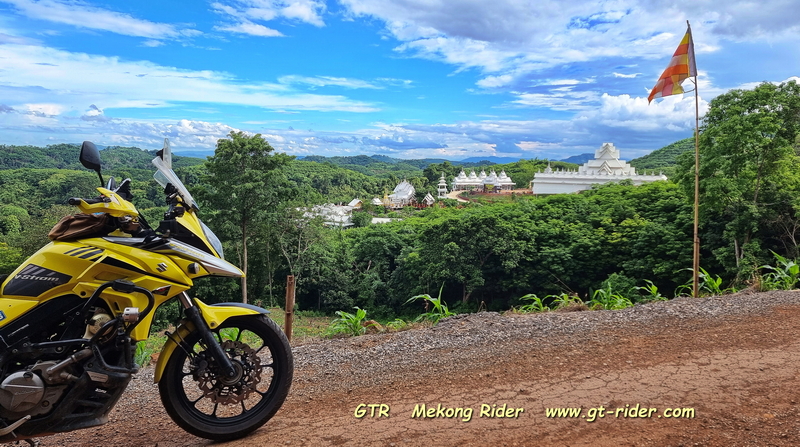
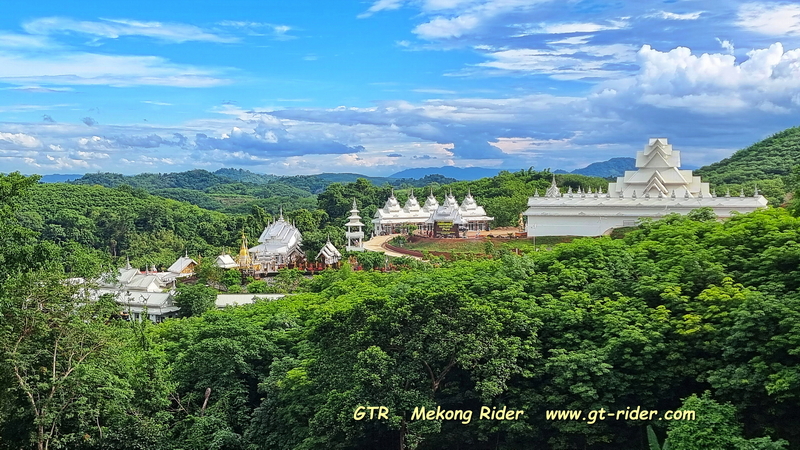
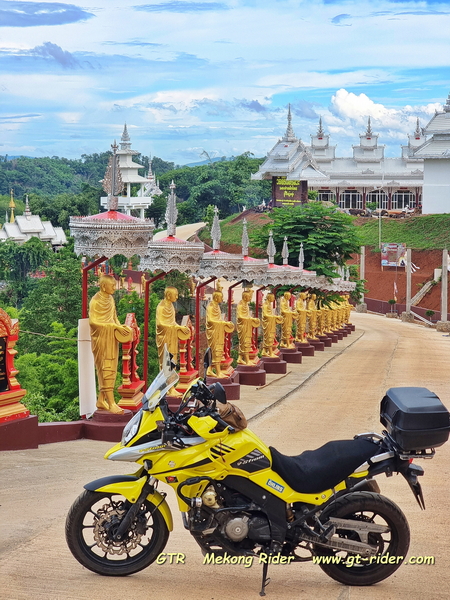
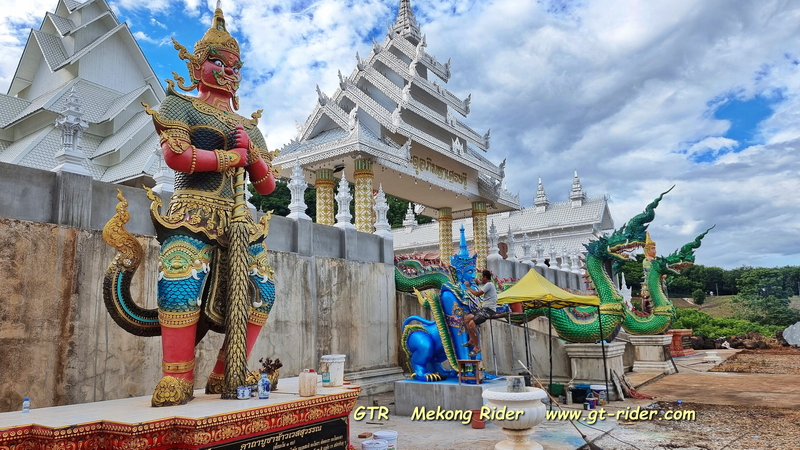
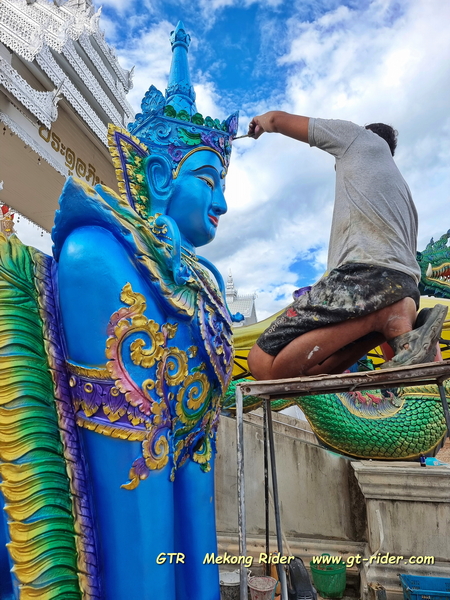
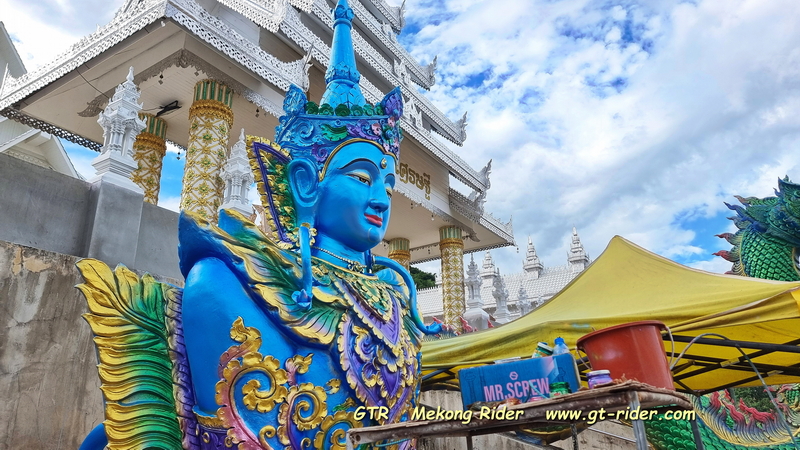
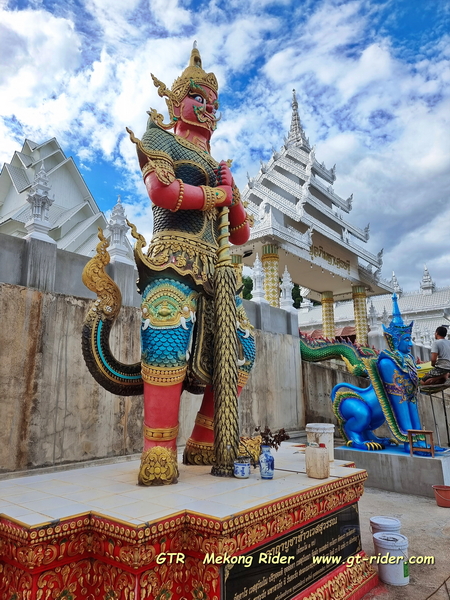
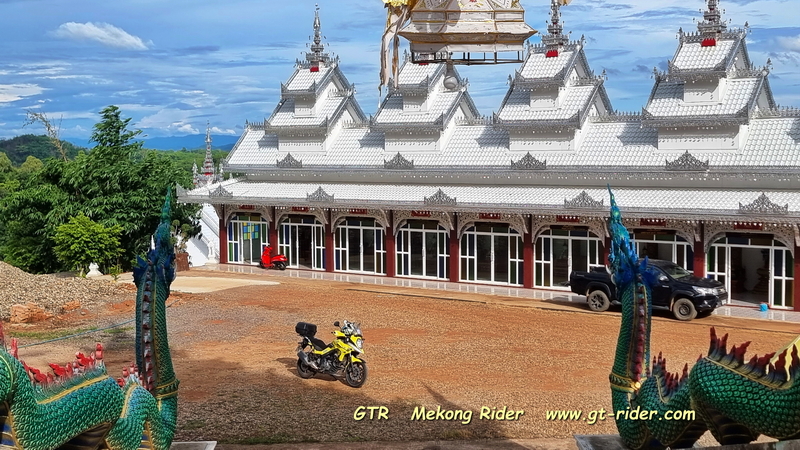
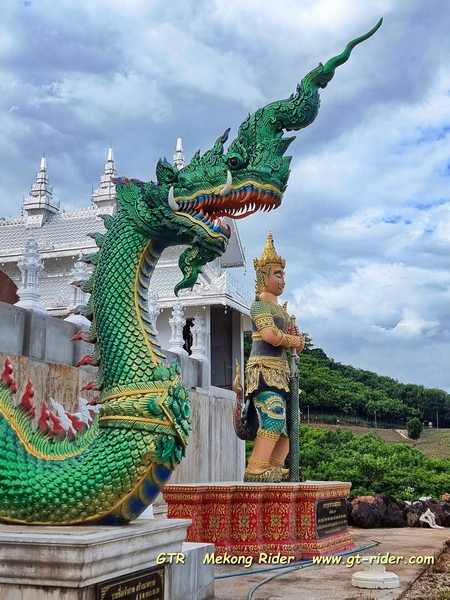
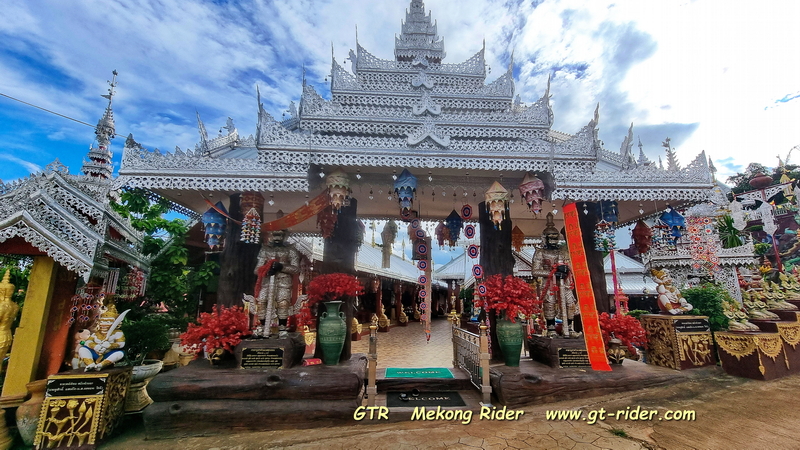
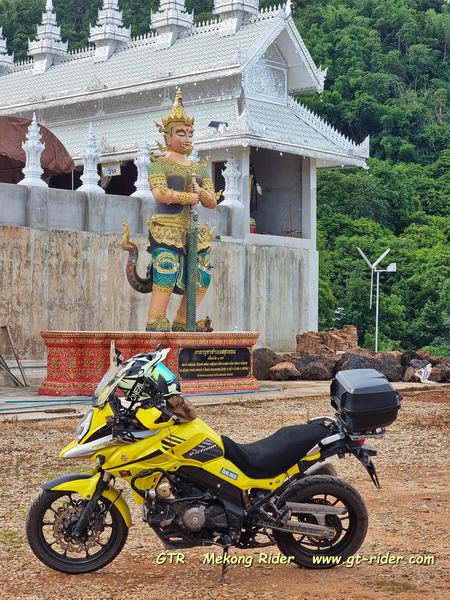
Wandering around the Wat, a senior monk says, "Make sure you go to see the Lek Lai Buddha, the only one in the world."
Lek Lai, I thought. Exactly what is that? Maybe iron or something similar, I guessed.
And which Buddha would that be??
The Lek Lai Buddha.
Some research back at home would be necessary.
Back at home, two interesting things turned up digging for info.
1. The village, Pha Taek, in which the Wat is located, is a Lua/Lawa village.
The Lua / Lawa are generally recognised as the original inhabitants of North Thailand and were in North Thailand before the Thais.
2. Lek Lai, according to folklore, is more than just a mineral. It’s often described as a living, sacred metal that forms deep within caves and mountains. Some tales call it “metal that flows,” derived from the words lek (iron/metal) and lai (to flow).
Samnaksong Lua Phra Sing 1 Lek Lai
The monastery's full name translates roughly as "Lua Monastery, Phra Sing 1, Lek Lai (the only one in the world)."
The site is associated with Lua (Lawa) ethnic traditions and local beliefs surrounding Lek Lai.
Lek Lai itself is part of Thai folklore and amulet culture. Claims about its supernatural properties are matters of religious belief and tradition rather than established scientific fact.
The Lua / Lawa - Before Lanna
Archaeological and historical traditions suggest that Lawa communities occupied much of what is now northern Thailand, including areas around present-day Chiang Mai, Chiang Rai, Lamphun, and beyond. Northern chronicles describe Lawa settlements and rulers before the establishment of major Tai kingdoms.
One of the most famous traditions says that when King Mengrai founded the city of Chiang Rai in 1262 and later Chiang Mai, he did so in areas already associated with Lawa settlements. The old site of Chiang Mai was known in Lawa tradition as Wiang Nopburi.
The Lawa and Chiang Rai
The Lawa appear frequently in legends connected with northern sacred sites, including Doi Tung. Historical traditions mention Lawa communities inhabiting areas of what is now Chiang Rai long before the formation of the modern province. Some scholars even note that the old name of the Mae Sai River may have been associated with the Lawa.
The area around Mae Chan, Doi Nang Non, Doi Tung, and the hills north of Chiang Rai would have been part of a frontier zone where Lawa, Tai Yuan, Shan, Akha, and other peoples interacted over centuries.
Beliefs and Spiritual Traditions
Traditionally, the Lawa practised animism and ancestor worship, believing that mountains, forests, caves, and rivers were inhabited by powerful spirits. Over time, Buddhism became intertwined with these older beliefs rather than replacing them entirely. Sacred mountains and caves remained important, and many local legends involving relics, guardian spirits, and mysterious substances such as Lek Lai likely emerged from this blending of Buddhist and older indigenous traditions.
Ironworking and Lek Lai
The Lawa were historically renowned as skilled ironworkers and blacksmiths. Northern Thai traditions often associate them with metalworking and the knowledge of minerals found in the mountains. This is one reason that places such as Samnaksong Lua Phra Sing 1 have become linked with stories of Lek Lai, the legendary sacred metal said to occur in caves and mountains. While the supernatural claims surrounding Lek Lai are matters of faith and folklore, the connection between Lawa communities and metalworking is historically well documented.
Lek Lai.
In folklore, Lek Lai is not merely a mineral. It is often described as a living sacred metal that grows inside caves and mountains. Some stories describe it as a "metal that flows," which is where the name comes from: lek (iron/metal) and lai (to flow).
The Cave Spirit Legend
The most widespread legend says that Lek Lai grows deep within sacred caves guarded by powerful spirits, devas, forest guardians, and giants (yaksha). Ordinary people cannot simply enter and take it. The cave guardians may hide it, mislead treasure seekers, or even drive away those who lack sufficient merit.
According to the stories, only highly accomplished monks, hermits, or ascetics can persuade the cave spirits to release the Lek Lai.
The "Calling" of Lek Lai
One of the most famous legends is that Lek Lai must be called, not mined.
Forest monks are said to meditate for days or weeks in caves, chanting sacred mantras. If the spirits approve, droplets of metallic substance emerge from the cave wall and slowly flow towards the monk. Witnesses sometimes compare it to mercury or molten metal moving under its own power.
This tradition is particularly strong in northern Thailand, where stories circulate of famous monks extracting Lek Lai from caves near the Thai–Myanmar border.
The Living Metal
Perhaps the most extraordinary belief is that Lek Lai is alive.
Legends claim it can:
Move like a snake.
Disappear and reappear.
Change weight.
Grow over time.
Return to its owner after being thrown.
Produce fragrances.
React to the spiritual state of its owner.
Some traditions even teach that Lek Lai must be "fed" with honey, as though it were a living creature.
Protection from Weapons
The best-known folklore surrounding Lek Lai is its supposed power to provide protection from harm.
Stories tell of hunters, soldiers, and forest travellers who survived gunshots, knife attacks, or accidents because they carried Lek Lai or an amulet containing it. Some legends go further and claim firearms malfunction in its presence. These are traditional beliefs rather than scientifically verified effects.
Check it out sometime. A fascinating Wat & history.
BTW how did they obtain so much "Lek Lai" for the Buddha and from where?
Find local businesses, view maps and get driving directions in Google Maps.

maps.app.goo.gl